
Preloader

HTO & UKA Surgery

High Tibial Osteotomy (HTO) and Unicompartmental Knee Arthroplasty (UKA) are orthopedic surgeries aimed at alleviating pain and restoring function in patients with knee joint issues, particularly osteoarthritis.

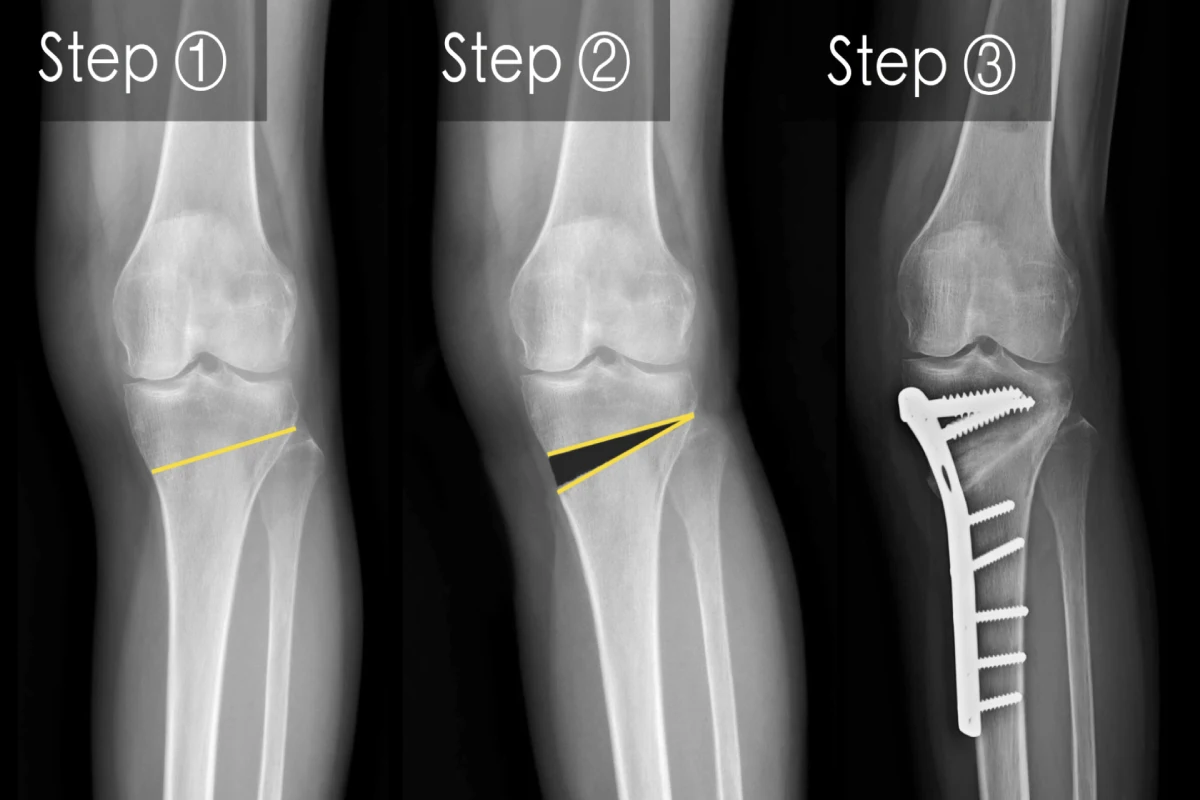
HTO involves cutting and reshaping the upper tibia to correct alignment problems, redistributing weight from the affected compartment to a healthier one. It is typically indicated for younger, active patients with early to moderate osteoarthritis.

In contrast, UKA replaces only one damaged compartment of the knee with an artificial implant, preserving natural structures in other compartments and allowing for a quicker recovery.

What is HTO ?

HTO is a surgical procedure that involves cutting and reshaping the upper part of the tibia (shinbone) to correct alignment issues in the knee joint. This can help redistribute weight from an affected compartment of the knee to the healthier side, thereby relieving pain and delaying the progression of osteoarthritis.

Indications for HTO :

  • Early to Moderate Osteoarthritis :u00a0Particularly in the medial (inner) compartment of the knee.
  • Varus Deformity :u00a0Often referred to as u201cbow-legged,u201d where the knee angles outward.
  • Young and Active Patients :u00a0Typically performed in younger patients whose knee condition is not yet severe enough to require a total knee replacement.

Procedure Overview :

  • Anesthesia :u00a0The surgery is usually performed under general or regional anesthesia.
  • Incision :u00a0An incision is made over the knee to expose the tibia.
  • Osteotomy :u00a0The tibia is cut and reshaped to shift the weight-bearing line from the damaged compartment to the healthier compartment.
  • Fixation :u00a0The bone is stabilized using plates, screws, or other fixation devices.
  • Closure :u00a0The incision is closed and bandaged.

Patients Treated

110,000 +

Successful Surgeries

12000 +

Benefits of HTO :

  • Joint Preservation :u00a0It helps preserve the knee joint, delaying the need for knee replacement.
  • Improved Alignment :u00a0Correcting alignment can alleviate pain and improve function.
  • Rehabilitation Potential :u00a0Many patients experience significant improvements in mobility and reduction in pain.

Challenges :

  • Recovery Time :u00a0HTO requires a rehabilitation period, with weight-bearing restrictions that can last several weeks.
  • Complications :u00a0Possible risks include infection, blood clots, and issues with bone healing.
  • Outcomes :u00a0While many patients benefit, results can vary based on individual factors, including age, activity level, and severity of osteoarthritis.

What is UKA ?

UKA, also known as partial knee replacement, involves replacing only one compartment of the knee (medial, lateral, or patellofemoral) with an artificial implant. This procedure is typically less invasive than a total knee replacement and aims to maintain more of the natural knee structure.

Indications for UKA :

  • Unicompartmental Osteoarthritis :u00a0Significant arthritis localized to one compartment of the knee.
  • Knee Deformities :u00a0Such as alignment issues that are limited to one side of the knee.
  • Younger or Low-Activity Patients :u00a0Patients who are not candidates for total knee replacement due to age or activity level.

Procedure Overview :

  • Anesthesia :u00a0Similar to HTO, UKA is performed under general or regional anesthesia.
  • Incision :u00a0A smaller incision is made over the affected knee compartment.
  • Bone Preparation :u00a0The damaged cartilage and bone are removed from the affected compartment while preserving healthy bone and cartilage in the other compartments.
  • Implant Placement :u00a0A prosthetic implant is then placed into the prepared area.
  • Closure :u00a0The incision is closed, and a sterile dressing is applied.

Benefits of UKA :

  • Minimally Invasive :u00a0Smaller incisions generally lead to less soft tissue trauma and faster recovery.
  • Preservation of Function :u00a0Retaining the unaffected compartments allows for better overall knee function.
  • Shorter Rehabilitation :u00a0Many patients can bear weight and engage in physical therapy sooner than with total knee replacements.

Challenges :

  • Indications :u00a0UKA is only suitable for specific patients with unicompartmental disease.
  • Complications :u00a0Risks include infection, implant failure, and stiffness in the knee.
  • Revision Rate :u00a0Unicompartmental implants may have a higher revision rate than total knee replacements, especially if the disease progresses in the other compartments.

Comparative Considerations :

  • Recovery and Rehabilitationu00a0
    • HTO :u00a0Recovery generally involves a longer rehabilitation period and gradual return to weight-bearing activities, often necessitating the use of crutches for a few weeks.
    • UKA :u00a0Rehabilitation is usually quicker, with some patients regaining a functional range of motion and the ability to bear weight within the first weeks post-surgery.

Conclusion :

Both High Tibial Osteotomy (HTO) and Unicompartmental Knee Arthroplasty (UKA) are valuable surgical options for patients suffering from knee osteoarthritis. The choice between the two depends on various factors, including the patientu2019s age, activity level, the distribution of arthritis, and the specific goals of treatment. A thorough evaluation by an orthopedic surgeon can help determine the most appropriate procedure to relieve pain, improve function, and enhance the quality of life for individuals with knee issues.